
I thought I knew enough about the Japanese but surprise, surprise, after reading "A Geek in Japan: Discovering the Land of Manga, Anime, Zen, and the Tea Ceremony" by Hector Garcia, I discovered a lot of other new things. Here are 10 of them covering Japanese customs, art, etiquette and values:
3. Ikebana means “live flower” and it's a Buddhist practice that first appeared in Japan in the sixth century (I never knew this art was that old.). And beyond just arranging flowers for decorative purposes, ikebana is actually a method for meditation. The positioning of flowers is important based on a lot of elements such as simplicity, the flow of life, seasons, etc.
4. There's a Japanese art called "Ukiyo-e" which literally means “pictures of the floating world.”
Popular themes are kabuki theater performances, portraits of geisha, samurai, sumo wrestlers, scenes with Mount Fuji in the background, etc.
Below is one of the most popular Ukiyo-e prints by Hokusai (one of the 2 most popular Ukiyo-e artists; the other being Hiroshige). Hokusai is said to have created more than 30,000 original pictorial works, and he is famous for the Thirty-six Views of Mount Fuji series. This is one of the 36 prints with Mount Fuji in the background.
But what's amazing about this art is how it's done and how it is mass produced (the quantity would depend on the stature of the artist). The process wasn't in the book but I researched it online. A Japanese artist would sketch the design using ink lines, then a wood carver carves the design on a block of wood. This would serve as the ink plate for printing the black outline. Then more blocks are carved out, one per color, and these would serve as the color plates. A printer then applies color on the black outline under the artist's supervision. To make sure the colors don't go out of place, each block has a marking to make sure the paper is set on the block in the right position. Such detail and precision.
Each print of the same design would be numbered (depending on the final quantity), then the original block was destroyed in order to ensure that buyers owned something unique.
1. Valentine’s Day is a big celebration in Japan. On this day, women give chocolates to men - not just for the man they love but to all the men they are close to such as friends and colleagues. So there are 2 kinds of chocolates women choose from: (a) “giri chocolate” (given by women as a social duty) and (b) “true chocolate” (given to the man they love).
After men receive chocolates, they feel now morally indebted to the women. Given the Japanese giri system (giri is somewhat the Japanese version of "utang na loob" or profound duty to return gratitude for what you have received), on March 14, men return the gesture to women. They give women white chocolate.
2. Have you noticed how Japanese women tend to cover their mouth when they laugh? This could gesture that was handed from one generation to another.
Apparently, for centuries, a woman showing her teeth or her open mouth has been considered more or less indecent in Japan. During the Nara Period (710–794), there started a custom that was known as ohaguro (meaning “black teeth”), which required a Japanese woman to dye her teeth black. Initially this meant a girl had become a woman, however, during the Edo Period (1603–1868), the meaning changed. Having black teeth became a sign that a woman was married.
For more than 200 hundred years, many married women blackened their teeth. And they didn't feel comfortable with the blackened teeth so when they laughed, they unconsciously covered their mouths.
After men receive chocolates, they feel now morally indebted to the women. Given the Japanese giri system (giri is somewhat the Japanese version of "utang na loob" or profound duty to return gratitude for what you have received), on March 14, men return the gesture to women. They give women white chocolate.
 |
| Source |
2. Have you noticed how Japanese women tend to cover their mouth when they laugh? This could gesture that was handed from one generation to another.
Apparently, for centuries, a woman showing her teeth or her open mouth has been considered more or less indecent in Japan. During the Nara Period (710–794), there started a custom that was known as ohaguro (meaning “black teeth”), which required a Japanese woman to dye her teeth black. Initially this meant a girl had become a woman, however, during the Edo Period (1603–1868), the meaning changed. Having black teeth became a sign that a woman was married.
For more than 200 hundred years, many married women blackened their teeth. And they didn't feel comfortable with the blackened teeth so when they laughed, they unconsciously covered their mouths.
 |
| Source |
4. There's a Japanese art called "Ukiyo-e" which literally means “pictures of the floating world.”
Popular themes are kabuki theater performances, portraits of geisha, samurai, sumo wrestlers, scenes with Mount Fuji in the background, etc.
Below is one of the most popular Ukiyo-e prints by Hokusai (one of the 2 most popular Ukiyo-e artists; the other being Hiroshige). Hokusai is said to have created more than 30,000 original pictorial works, and he is famous for the Thirty-six Views of Mount Fuji series. This is one of the 36 prints with Mount Fuji in the background.
 |
| Source |
But what's amazing about this art is how it's done and how it is mass produced (the quantity would depend on the stature of the artist). The process wasn't in the book but I researched it online. A Japanese artist would sketch the design using ink lines, then a wood carver carves the design on a block of wood. This would serve as the ink plate for printing the black outline. Then more blocks are carved out, one per color, and these would serve as the color plates. A printer then applies color on the black outline under the artist's supervision. To make sure the colors don't go out of place, each block has a marking to make sure the paper is set on the block in the right position. Such detail and precision.
Each print of the same design would be numbered (depending on the final quantity), then the original block was destroyed in order to ensure that buyers owned something unique.
5. The father of Manga is Osamu Tezuka. Story has it that his inspiration was Disney animation which he combined with Japanese arts and his own innovation, giving birth to a new genre. He finished is first Manga in 1947 and quickly sold 400,000 copies. That must be a lot in the 1940s!
But what's amazing for me about manga are the superheroes. For the action superheroes, they are usually mortals who since their childhood, had sacrificed everything for their passion to become better at what they do. The common them in a lot of manga is - If you work hard, you can achieve anything. What a nice underlying theme.
Another interesting thing about manga is that enemies are evil at first but usually, in the end, their good side is revealed.
Another interesting thing about manga is that enemies are evil at first but usually, in the end, their good side is revealed.
Tezuka died when he was only 60 but left a legacy of more than 150,000 pages and 60 animated movies. He produced an average of 10 pages of manga a day. 😮
Tezuka’s Atom (Astroboy to us) has become one of the icons of Japanese pop culture.
 |
| Astroboy (Source) |
6. Meishi means “business card”. The are certain rules on how to treat a meishi.
You should take it with both hands.
You should not fold it.
You should not stick it in the back pocket of your pants.
You should not write on it. (This is the new thing I learned about meishi. I sometimes write on them if I want to remember something about the person or the company's products or services.)
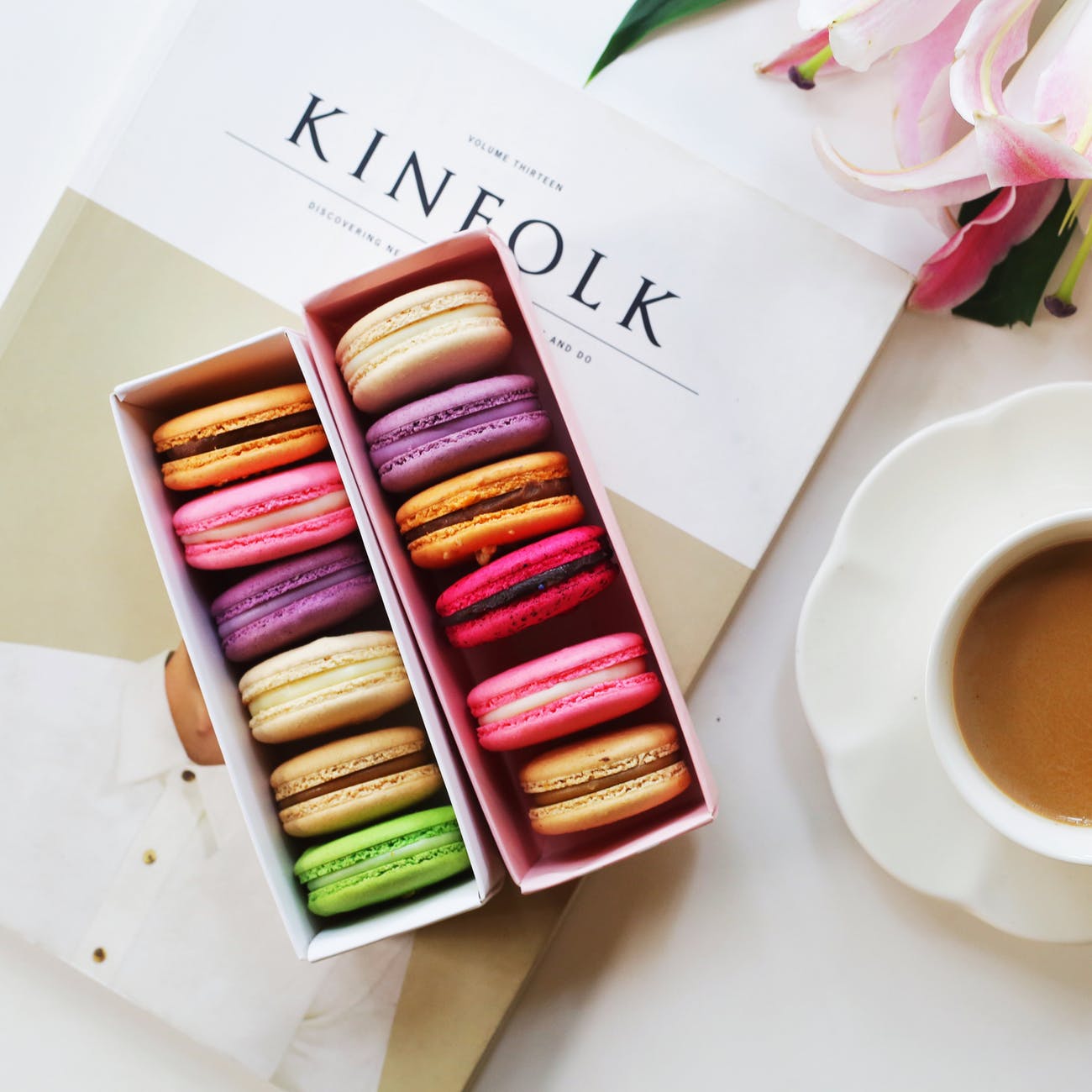
7. The Japanese give omiyage to their colleagues after coming from trip (omiyage is the Japanese version of "pasalubong"). When one comes back to work, they must bring a small gift, usually sweets, to share with colleagues. They approach their coworkers offering the sweets and when they finish going around, the leave the remaining omiyage in a common spot in the office, usually near the coffee machine.
 |
| Source |
8. Honne are wishes, opinions, and the true feelings an individual has versus tatemae which are social obligations and opinions that the individual should say based on what is appropriate to say.
Sometimes what is tatemae doesn't match one's honne and in Japan, knowing how to express tatemae and honne at the right time is considered a virtue. This is because in Japan, preserving harmony is more important, thus, sometimes, true thoughts (honne) are not explicitly verbalized so as not to hurt people’s feelings.
An example given in the book is when you’re invited to tea at a Japanese home, and as dinnertime draws near your hosts may ask you - “Would you like to stay for dinner?”. This is tatemae, something the host needs to do out of social obligation. In return, you should answer something like, “I’m not hungry, thank you.” (Good thing I have read this book! I might immediately say yes coz how can I say no to an authentic Japanese home-cooked meal? 😅)
9. The Japanese have a kind of party known as nomikai. This is where coworkers would go to an izakaya (Japanese traditional bar) to chat, eat, and drink. This is their opportunity to show their honne (true feelings and opinions) and talk about their problems at work or in the family. Drinking alcohol allows them to open up and express their real thoughts and feelings and not be judged as improper. Expressing your honne during nomikai is acceptable.
The book cited 2 very well-known sayings in Japanese on being humble:
“Nou aru taka wa tsune wo kakusu”–Talented eagles hide their claws.
“Deru kui wa utareru”–Stakes that stick out can be hammered.
Such beautiful sayings loaded with wisdom. 😊

10. One outstanding quality of the Japanese which I highly admire is their modesty and humility - no matter what their social class, talent, or job position is. They never talk about their achievements unless asked but even when they answer, they downplay it and attribute their success to the people around them. In Japan, humility is one of the bases of professional success.
The book cited 2 very well-known sayings in Japanese on being humble:
“Nou aru taka wa tsune wo kakusu”–Talented eagles hide their claws.
“Deru kui wa utareru”–Stakes that stick out can be hammered.
Such beautiful sayings loaded with wisdom. 😊


